

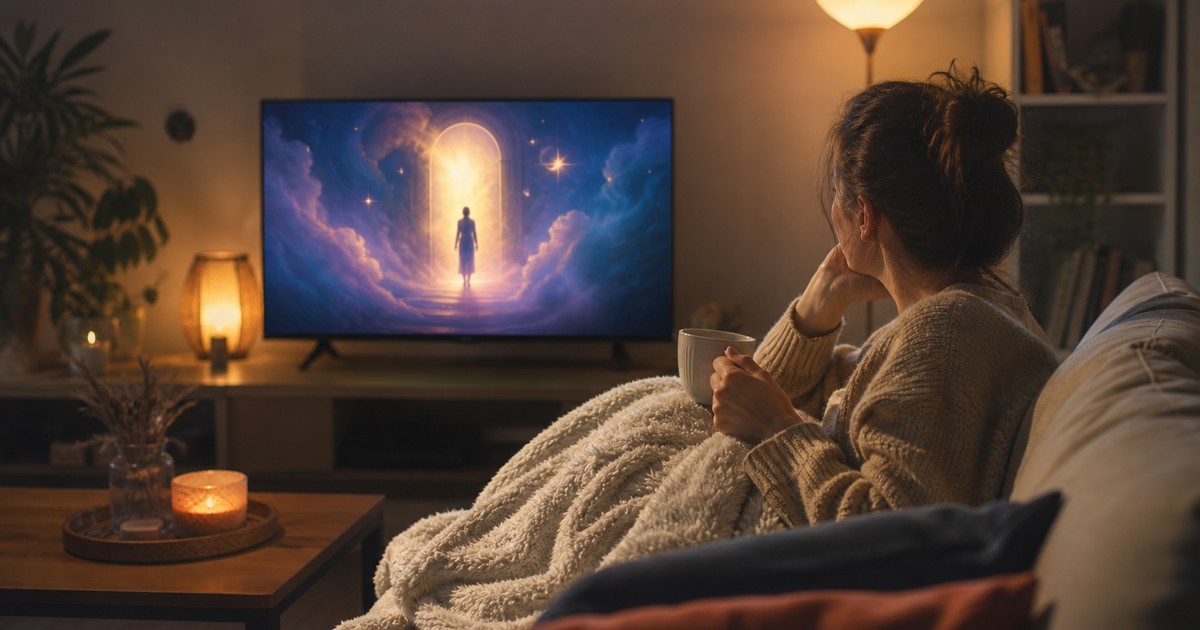
A familiar television episode can feel like a soft landing after an unpredictable day. When the story includes a clairvoyant, medium, prophetic dream, or magical guide, it adds another form of reassurance: the fantasy that confusing events belong to a pattern someone can read. That does not make fictional psychic abilities evidence of real-world prediction. It does reveal what audiences often want from comfort stories—continuity, meaning, and a safe way to rehearse uncertainty.
Quick Guide
Why rewatching can feel easier
A new show asks for attention: new names, threats, rules, and emotional stakes. A rewatch reduces that load because you already know the rhythm and outcome. The familiar opening music or setting can become a transition cue from demand to rest.
The effect is not mystical and it is not universal. A once-comforting episode can also become painful because of grief, memory, or changing taste.
What clairvoyant characters do for a story
Psychic characters give writers a way to reveal secrets, foreshadow danger, or voice a truth other characters avoid. They may play the guide, outsider, investigator, comic skeptic, or misunderstood witness. These are narrative roles, not clinical descriptions of people who identify as psychic.
Because the audience sees how the plot resolves, the psychic character can make a chaotic fictional world feel knowable.
The appeal of hidden order
Uncertainty is uncomfortable. Prophecy stories convert uncertainty into clues: a symbol will matter later, a dream points somewhere, or an apparently random meeting has a purpose. Even when the prophecy is misleading, the story promises resolution.
Viewers can enjoy that structure while keeping a clear boundary between fiction and decisions about health, money, safety, or relationships.
A grounded way to use comfort viewing
Choose the episode intentionally, decide whether you want company, laughter, or gentle distraction, and set a stopping point that protects sleep. Pair the show with one physical cue such as dimmer lights, tea, stretching, or putting work notifications away.
Afterward, ask whether you feel restored, neutral, or more activated. The answer helps you select media based on effect rather than habit.
When comfort becomes avoidance
Rest and avoidance are not the same. A comfort show is useful when it helps you return to life with more capacity. It becomes less helpful when it repeatedly displaces sleep, food, work, care, or needed conversations.
If anxiety, low mood, or isolation is persistent, media can remain part of a soothing routine while you also seek appropriate support.
Read the archetype, not the character as evidence
Try a reflective exercise: What does the psychic character know? What do they misunderstand? Who believes them, and why? What would change if the story had no prophecy? These questions turn passive viewing into media literacy.
You can also ask which role you want in your own situation: the person who notices, the person who tests evidence, the person who asks for help, or the person who makes the next practical move.
Continue Exploring
To compare fictional certainty with real claims, read how to evaluate an apparent prediction hit. The guide separates a striking experience from evidence that can be assessed.
Frequently Asked Questions
1. Why do I rewatch the same show?
Familiar characters and outcomes can demand less attention and feel predictable after a stressful day.
2. Are psychic TV characters based on real abilities?
Some borrow from spiritual traditions or reported experiences, but fictional plots are not evidence that the depicted powers work.
3. Is comfort TV bad for mental health?
Not inherently. Context, duration, sleep, and whether viewing supports or displaces life all matter.
4. Why do prophecy plots feel satisfying?
They turn uncertainty into clues and promise that confusing events will eventually connect.
5. Can a scary supernatural show still be comforting?
Yes. Familiarity and controlled suspense can feel safe to some viewers, while others may feel more activated.
6. How can I stop autoplay from ruining sleep?
Choose an episode in advance, disable autoplay, and set a clear stopping cue.
7. What if a favorite episode now feels upsetting?
Stop or switch. Associations can change after loss, trauma, or major life events.
8. Can I use tarot after watching?
Yes, as a reflective activity. Keep the questions about your response and choices rather than treating the plot as a prediction.