
A crystal can be a personal reminder to pause and reflect. It cannot tell you what your life is for or choose your next step. The useful part of this exercise is the questions you ask, the circumstances you consider and what you try afterward—not a special power attributed to the stone.
You do not need to buy anything to explore purpose. Use a stone you already own, another meaningful object or simply a quiet moment. If crystals belong to your spiritual practice, you can keep that personal meaning without treating it as proof of a predetermined life path.
Purpose can have more than one part
Meaning does not have to come from one job, title or lifelong calling. Caring for someone, learning, making things, participating in a community and earning a living may all matter to you in different ways. You can value several roles without making every activity part of a grand mission.
Purpose can also change as your health, responsibilities, interests and opportunities change. A role may be worthwhile even when it is tiring or ordinary; feeling excited every day is not a requirement. Conversely, an activity that once mattered may no longer fit your circumstances.
Five questions to start with
- What am I feeling? Name the feeling without assuming it is an instruction. Restlessness might invite exploration, but it could also mean you need rest or clearer boundaries.
- What keeps drawing my attention? Look for recurring interests and examples from your actual life, rather than searching for a single perfect answer.
- What feels missing? Be specific: connection, variety, useful work, time outside or something else. A precise need is easier to respond to than “I need to change everything.”
- Which direction would I like to explore? Describe an activity you could try, not an identity you must immediately become.
- What would make that exploration workable? Consider time, money, access, support and current commitments. These are part of the decision, not signs of spiritual failure.
Write brief answers. If nothing comes to mind, leave the question open. You do not have to force an insight during one sitting.
How to use a crystal as an optional prompt
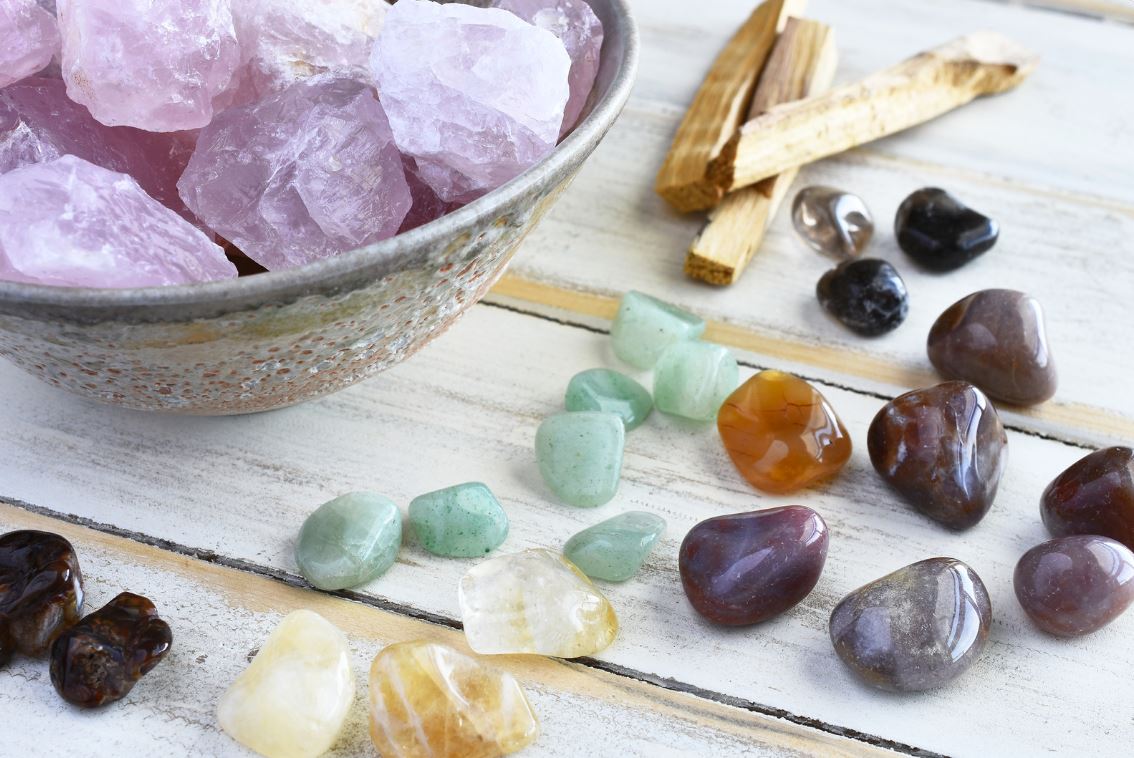
Place a clean, intact stone on the table if you enjoy having it nearby. Choose it because you like its appearance or personal association—not because a seller promises it will reveal your destiny. You can link it to a simple reminder such as “What matters enough for one small action?”
Keep the object separate from the answer. A feeling, coincidence or change in how the crystal looks is not confirmation that you should leave a job, spend money or make a major commitment. Consult relevant facts and the people affected by your decision.
For another symbolic approach, see stones as optional reflection themes and their limits. If repeated words suit you better, try pairing a personal phrase with a practical action.
From personal meaning to a small test
1. Name a value
Choose something specific that matters: creativity, connection, care, learning or independence. Identify an occasion when it already mattered in your life.
2. Check your limits
Set a realistic time and cost limit. Include energy, access and responsibilities. Decide what you will not sacrifice for this experiment.
3. Try one action
Arrange a short conversation, make a small project or attend an accessible introductory activity. Keep the first step reversible where possible.
4. Review what happened
Ask what you enjoyed, what was difficult and whether the next step still fits. Continue, adapt or stop; the result is information, not a verdict on your worth.
Example: exploring a wish to help others
Instead of concluding “My purpose is to become a healer,” write: “I want more opportunities to contribute.” Set a limit of one hour this week, then ask a local organization about a suitable volunteer role or offer one clearly defined practical task to someone who wants the help.
Afterward, consider whether the activity matched your abilities, boundaries and available time. You may find a direction to explore, or learn that another form of contribution suits you better. A crystal can remind you to review the experience, but it does not establish professional qualifications or permission to give medical advice.
When you are still unsure
You can keep exploring without announcing a life-changing decision. Separate “I am curious about this” from “I am ready to commit.” For choices involving work or training, check the actual requirements, costs and alternatives before enrolling or paying.
A reader’s interpretation is also something to consider, not an authority over your future. Be cautious if someone claims only a paid crystal, cleansing or further reading can unlock your purpose. You are free to decline and seek practical guidance elsewhere.
For more ways to move from reflection to action, browse 27 grounded intention-to-action ideas or a practical approach to goals when wishing is not enough.
“Figure out what your inner man is telling you.” As if my inner dialogue isn’t already loud enough with anxiety and self-doubt!
The perspective presented here ignites an intriguing discussion on purpose and identity. It reminds us that our paths are not linear but multifaceted.
‘Listen to what your inner man is saying’—a charming metaphor! But what if my inner voice just wants pizza? Asking for a friend!
Yet, one must question if these testimonials are merely coincidence or a psychological placebo effect masquerading as spiritual enlightenment.
While the notion of crystals aiding in one’s life journey is intriguing, I find it hard to accept without empirical evidence. Can we truly rely on gemstones for insight?
‘Crystals can help you find yourself.’ Does this mean my next existential crisis will be brought to you by Amethyst? What a world we live in!
‘Your purpose will change over time.’ Indeed! It’s like trying on different hats until one fits just right. A compelling read that encourages exploration.
This article beautifully encapsulates the transformative power of crystals in guiding our spiritual journeys. It’s refreshing to see such a nuanced approach to self-discovery.
‘Align your soul with your purpose’—as if we all have a celestial GPS! Next, they’ll tell us where to find the nearest Starbucks on our spiritual journey.
Perhaps the lack of scientific backing doesn’t negate personal experiences. Many individuals report positive changes through such practices, albeit subjectively.