
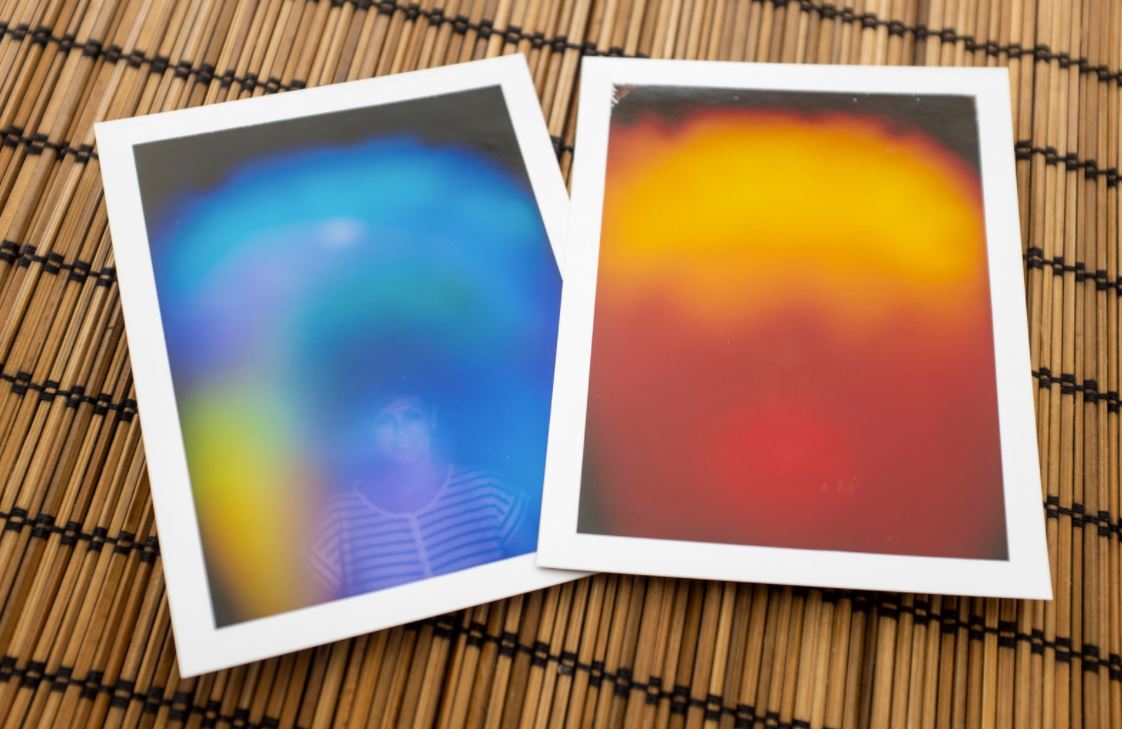
Aura colors are part of a spiritual interpretation system, not a way to establish someone’s health, private thoughts or moral character. Different readers may use different meanings. A confident color label does not make an invisible condition known.
If you enjoy color symbolism, use it as optional language for reflection. The fourteen colors below are not a universal chart or a ranking of spiritual worth. The prompts are practical questions for this guide, not diagnoses or predictions.
Fourteen colors as optional reflection prompts
Choose any color that interests you. You do not have to discover a “true” color, match a reader’s description or change yourself to fit a label.
Purple
Prompt theme: Meaning.
What belief or question matters to me right now?
Blue
Prompt theme: Communication.
What would I like to say more clearly?
Green
Prompt theme: Growth.
What am I learning or trying to maintain?
Yellow
Prompt theme: Curiosity.
What would I like to explore without committing immediately?
Orange
Prompt theme: Creativity.
What could I make or try with the resources I have?
Red
Prompt theme: Action.
What needs a practical response rather than a prediction?
Pink
Prompt theme: Care.
How could I offer or request care with clear boundaries?
Brown
Prompt theme: Everyday needs.
What ordinary task or resource needs attention?
Gray
Prompt theme: Uncertainty.
What can I leave undecided while gathering information?
Black
Prompt theme: Privacy.
What do I prefer to keep private or decline?
White
Prompt theme: Space.
What could I simplify without expecting perfection?
Silver
Prompt theme: Review.
What information should I check again?
Gold
Prompt theme: Priorities.
Where do I want to put my time and effort?
Rainbow
Prompt theme: Variety.
Which different feelings or roles can coexist without a ranking?
Turn a color association into a useful question
- Choose a color. Pick one because you like it or its prompt, not because you must confirm a hidden trait.
- Describe the actual situation. For example: “I need to clarify a plan with someone.”
- Answer one question. With blue, you might write what you want to communicate and what remains uncertain.
- Choose an ordinary action. Ask a question, check information, take a break or make a plan. You may also leave the matter open.
This exercise works without an aura reading. The color can be a reminder; it does not cause the result. If another symbolic object appeals to you, explore life-purpose reflection and small practical tests or element themes as optional questions.
Do not rank people by a color
A black or gray label does not mean someone is negative, blocked or unforgiving. White, gold and rainbow do not prove rare gifts or a higher spiritual status. It is not fair to infer a person’s value or intentions from a reader’s color interpretation.
Colors also should not assign qualifications. Green does not make someone a doctor or therapist, and blue does not demonstrate mind-reading. Judge a service by its actual scope, conduct and relevant credentials rather than imagery.
Keep health decisions outside the color chart
Do not use an aura color to diagnose a condition, explain symptoms or change treatment. A colored image is not a substitute for qualified assessment.
Related energy practices also require careful distinctions: NCCIH’s Reiki fact sheet says the energy field proposed in Reiki lacks scientific support. Reiki and aura reading are not the same practice, and that source does not validate an aura-color chart. Spiritual energy language should not be turned into a medical finding.
If you have a health concern, speak with an appropriately qualified professional. You can keep a personal spiritual practice without asking it to replace care.
Questions to ask before paying for a reading or image
- How is the image or interpretation produced?
- What is the full price, and what is included?
- Who can access the photo, personal details or session record?
- Can I disagree or stop without buying follow-up work?
- Is the provider making claims about illness, danger or required paid cleansing?
Do not assume a change in colors verifies a change in health or energy. Ask about the method, and separate the picture from facts you know independently.
Pause if a reader uses a color to threaten you, identify a curse or demand payments for protection. You do not need to buy another session to remove an unverified threat. See reading questions, service checks and practical limits.
Reflection without a verdict
A useful prompt can help you describe a feeling or priority without claiming to reveal its hidden cause. You are free to choose a different word, dislike the interpretation or take no action. For a simple non-symbolic alternative, try a comfortable mindful pause.
Frequently asked questions
1. What is an aura in this article?
It is a spiritual concept some people use to describe a supposed field around a person. An aura interpretation is not a medical finding or verified access to hidden thoughts.
2. Are there exactly 14 aura colors?
The fourteen labels here are a reference list, not an established universal classification. Different writers and readers may use different colors or meanings.
3. What do the colored cards on this page mean?
They are optional reflection prompts created for this guide. They are not measured traits or instructions about the color you must have.
4. Does purple prove spiritual advancement?
No. A color label cannot establish spiritual rank. You may use purple as a prompt about personal meaning without comparing yourself with others.
5. Does blue mean I am psychic?
No. A blue label does not demonstrate psychic ability. This guide uses blue only as an optional communication prompt.
6. Does green mean someone can heal others?
No. A color interpretation does not establish healthcare qualifications or treatment ability. Check credentials separately when seeking professional care.
7. Does orange prove good health?
No. A color label cannot verify health. Symptoms and health decisions need appropriate qualified assessment.
8. Is red a warning of negative energy?
Not an established warning. You do not need to buy cleansing or protection because someone assigns you a red color.
9. Does black mean someone is bad?
No. Do not use a color label to judge morality, forgiveness or whether a person is safe. Consider actual behavior and circumstances.
10. Are white or rainbow colors better than others?
There is no justified ranking of a person’s worth or spiritual status by these labels. This guide does not classify some colors as superior.
11. Can a color reveal another person’s thoughts?
A reading does not establish that. Ask the person when appropriate and respect what they choose not to share.
12. Can a colored photograph diagnose an illness?
Do not treat a colored print as a medical test. Ask how an image was produced and take health concerns to qualified professionals.
13. What if a reader assigns different colors at different times?
That change does not by itself establish an invisible condition or explain a mood. Consider the method and keep interpretation separate from independently known facts.
14. What if I am pressured to pay to change a color?
Pause and decline fear-based pressure. A claim that a color is dangerous is not proof that paid work is necessary.
15. How can I use colors without an aura reading?
Choose a color you like, answer a practical prompt and decide on one ordinary action. You do not need a camera, special object or paid session.
What a fascinating exploration of auras! The intricate connection between color and emotional states is truly enlightening. I find the concept of using aura colors as a means for self-reflection quite profound. Thank you for sharing this wisdom!
‘Auras indicate your spiritual status’? Fascinating! Next up: let’s analyze our coffee cups to gauge existential dread levels! Truly groundbreaking work here; I’m sure the scientific community will be knocking down your door any moment now.
So, we’re now attributing personal insights to colorful halos? Why stop at auras when we can also consult the stars? Perhaps my black aura is just me being edgy or maybe I’m just really into heavy metal music?
Another article peddling pseudo-science under the guise of spirituality. While it’s charming to think colors dictate our emotional state, let’s not forget that psychology has far more empirical evidence to offer. It’s time we prioritize critical thinking over colorful fantasies.
The delineation of each aura color presents an opportunity for deeper introspection. Understanding how these hues reflect our inner selves may guide us toward greater emotional intelligence. It serves as a reminder that self-awareness is crucial for personal growth.
This piece offers an intriguing blend of spirituality and psychology. The idea that our mental states can manifest in an aura’s colors is a delightful metaphor for self-awareness. However, one must approach such claims with both curiosity and skepticism.
*chuckles* If only life were as simple as matching emotions to colors! Should I wear more yellow during exam week? Maybe I should paint my office in rainbow hues to spread positivity? If only it were so straightforward!
*sigh* If only my aura could also do my laundry while it’s at it! A rainbow aura must be lovely—does it come with unicorns and glitter too? I mean, if colors can determine our emotions, mine would probably be a confused shade of tie-dye!