

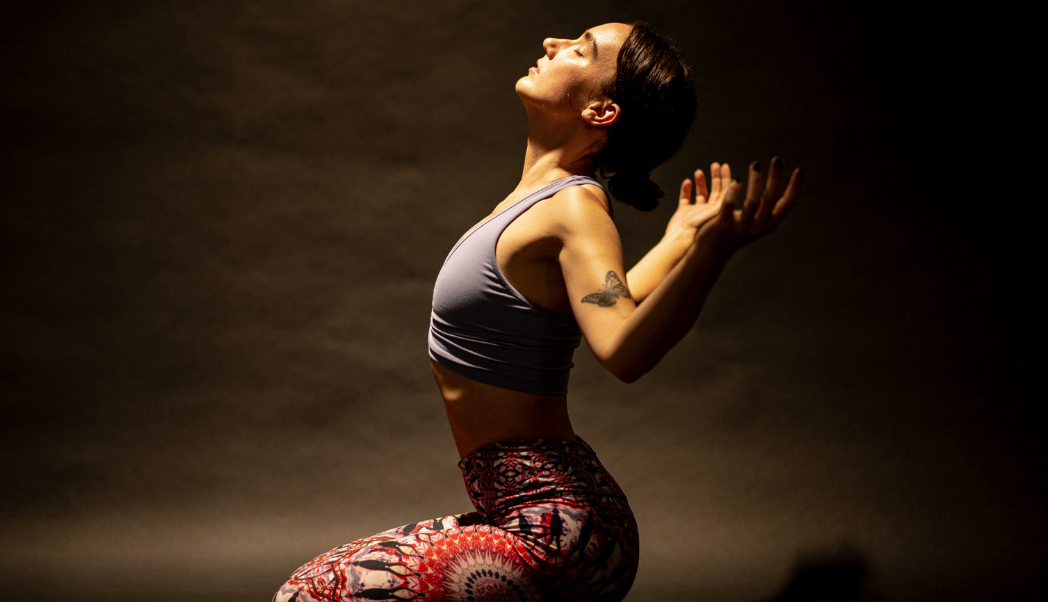
A chakra-themed yoga practice can be a way to explore meaning and attention. It should not become a test of your flexibility, a promise of healing or a reason to push past your limits.
This guide helps you choose an appropriate class and use optional reflection themes. It is not a step-by-step tutorial for advanced poses or a treatment plan.
Put the person before the sequence
NCCIH recommends learning yoga with a qualified instructor and notes that injuries can occur. New practitioners should avoid extreme practices. If you have a health condition, injury or pregnancy-related concern, discuss adaptations with your healthcare professional and instructor.
Keep chakra symbolism separate from health claims
Some yoga teaching uses chakra imagery to explore themes such as grounding, expression or connection. Chakra models vary, and yoga includes more than one approach to movement, breathing and spiritual practice.
Feeling relaxed after class does not prove that an energy center opened. Difficulty with a pose does not diagnose a blockage. You can use symbolism if it is meaningful to you, or simply notice your comfort and attention without assigning an energy explanation.
Choose one intention, not a demanding sequence
These are optional themes for reflection, not a prescription for particular poses.
Grounding
Ask: “What would help me feel supported in this setting?” This could mean a stable seat, a less crowded space or permission to take a break.
Agency
Ask: “What can I choose today?” You can decline a movement, request a modification or leave out a practice.
Connection
Ask: “What kind of support feels welcome?” A friendly class does not require personal disclosure or accepting touch.
Expression
Ask: “Can I communicate a limit clearly?” A simple “That is not comfortable for me” is enough.
Perspective
Ask: “What did I actually notice?” Distinguish a sensation from a conclusion about energy, health or the future.
Meaning
Ask: “Does this language fit my beliefs?” You can take part in appropriate movement while omitting imagery or spiritual claims.
Questions to ask before choosing a class
- What level is it? Ask whether beginners are welcome and what experience is expected.
- How are movements adapted? Ask about supported options and whether you can rest instead of following every movement.
- What are the teacher’s qualifications? Spiritual titles do not replace relevant instruction or clinical credentials.
- How is touch handled? Ask whether hands-on adjustments are optional and require consent.
- What spiritual material is included? Ask about chanting, imagery or meditation if you prefer to know beforehand.
- What does it cost? Check cancellation terms without committing to an expensive course to obtain a promised “awakening.”
A practice can have clear limits
Agree on movements with a qualified instructor rather than trying a complex balance, deep backbend or bound pose from a written description. Keep your eyes open if that feels more comfortable. You do not have to follow breath-holding, forceful breathing or a fixed meditation duration.
Do not treat pain, dizziness or strong distress as a necessary stage of spiritual growth. Stop the activity and get appropriate guidance. A teacher should respect a refusal without claiming that resistance proves an energy problem.
Permission to keep it ordinary
You may finish a class without a vision, emotional release or special feeling. Consider whether the instruction was clear, your boundaries were respected and the practice was suitable for you. Those are more useful checks than judging spiritual “progress.”
If inward attention feels difficult
Meditation is optional. You can keep your eyes open, focus on your surroundings or choose not to participate. NCCIH’s meditation guidance notes that negative experiences can occur and advises against replacing conventional care. For a gentler discussion of choice and boundaries, read chakra reflection after trauma.
Reflect afterward without diagnosing yourself
Try three short questions: “What was comfortable?”, “What would I change next time?” and “What did I learn about my preferences?” Skip tracking if it becomes a burden.
For more on keeping interpretations separate from evidence, see reflection after a reading. If someone uses testimonials to promise an energy cure, apply our review checks before spending money.
Frequently asked questions
1. Does yoga prove that chakras are real physical structures?
No. A yoga practice can include chakra symbolism without establishing chakras as medically verified structures.
2. Must I believe in chakras to do yoga?
No. You can focus on movement, rest or attention and omit spiritual language that does not fit your beliefs.
3. Does every yoga tradition use the same chakra model?
No. Traditions and interpretations vary. A modern seven-chakra theme should not be presented as the only form of yoga.
4. Do I need an advanced pose to feel spiritually connected?
No. A personal intention does not depend on flexibility, a difficult balance or a particular posture.
5. Should beginners follow a difficult sequence from an article?
No. Learn appropriate movements with a qualified instructor who can offer modifications rather than copying unfamiliar advanced poses from text.
6. Can I use a chair instead of sitting on the floor?
You can ask an instructor for supported options. The point is an appropriate practice for your circumstances, not meeting a fixed visual ideal.
7. Do I have to close my eyes?
No. Keep your eyes open if that is more comfortable, especially when standing or moving. Spiritual reflection does not require closed eyes.
8. Should I push through pain to release a blockage?
No. Pain is not evidence that an energy blockage is releasing. Stop the activity and seek appropriate guidance rather than treating pain as spiritual progress.
9. Must I hold my breath or breathe forcefully?
No. This guide does not prescribe breath retention or forceful breathing. Ask a qualified instructor about techniques appropriate to you.
10. Can yoga replace treatment for a health condition?
No. Do not use chakra-focused yoga to replace prescribed care or delay a medical assessment.
11. What if meditation brings up distress?
You can stop, keep your eyes open or omit meditation. Discuss ongoing or worsening distress with a qualified professional.
12. Can I practice during pregnancy or with an injury?
Ask your healthcare professional and instructor about your individual situation and appropriate modifications before starting.
13. How should I choose a class?
Ask about the teacher’s training, class level, modifications and consent for hands-on adjustments. Choose a setting where questions and opting out are welcome.
14. What should I track afterward?
Notice ordinary details such as comfort, whether you respected your limits and whether the class suited you. You do not need to measure spiritual energy.
15. Is not feeling anything a failure?
No. There is no required sensation, vision or emotional release. A quiet or ordinary experience does not mean you did something wrong.
While yoga may have its benefits, this article seems overly idealistic. The idea that simply practicing yoga can lead to spiritual enlightenment is a bit far-fetched. It requires more than just poses; it demands a deep commitment and understanding. 🤔
This article provides a solid overview of various yoga practices linked to chakra alignment. It’s essential to recognize that each individual may experience different benefits based on their unique needs and lifestyle choices.
@InformedIvy, while I appreciate your take, let’s not forget that many people might be drawn to yoga for fitness alone, not necessarily spiritual enlightenment or chakra balancing!
But isn’t that the beauty of yoga? It helps you confront those challenges in a more mindful way! It’s not just about the poses; it’s about the journey.
I think Sam makes an interesting point. While yoga is beneficial, spiritual growth often requires facing deeper personal challenges rather than just practicing poses.
‘Open your heart’? Oh sure, let me just unlock my emotional baggage while balancing on one leg in Warrior Pose! Who knew achieving inner peace was so physically demanding? 🙄
@SarcasticSally, while it may seem challenging, many find that physical discomfort often leads to emotional breakthroughs. You never know what you might discover!
‘Imagine your inner self becoming one with the universe.’ Sounds great, but I can barely manage to become one with my couch after a long day! 😂 Maybe I need a ‘Sofa Pose’ instead!
I absolutely love this article! It beautifully highlights the connection between yoga and spiritual enlightenment. I’ve been practicing yoga for years, and I can personally attest to its transformative effects on both my mind and body. 🌟