


A gratitude stone is a small decorated object you choose to associate with appreciation. Making one can be an enjoyable craft. It is not a cure, an energy-clearing tool or a requirement to feel positive when life is difficult.
You can use a stone you already have permission to use, a suitable craft stone or a paper card instead. Keep the project simple; no special crystal, ritual or expensive kit is needed.
What you need
- An intact, smooth stone intended for crafting, without sharp edges or loose pieces.
- A marker or paint labeled for the surface and intended user.
- A protected work surface and any cleaning materials the supplier recommends.
- A place where the decorated stone can dry undisturbed.
Follow the material labels, including ventilation, cleanup, age guidance and drying instructions. The Health Canada craft-safety guide emphasizes reading labels and following instructions. If children participate, choose materials specifically suitable for them and supervise the activity.
This is a display craft, not a food-contact item or a toy to put in the mouth. Keep small stones and supplies out of reach of young children and pets. Do not take stones from a place where collecting is prohibited or from someone else’s property without permission.
Four steps to make your stone
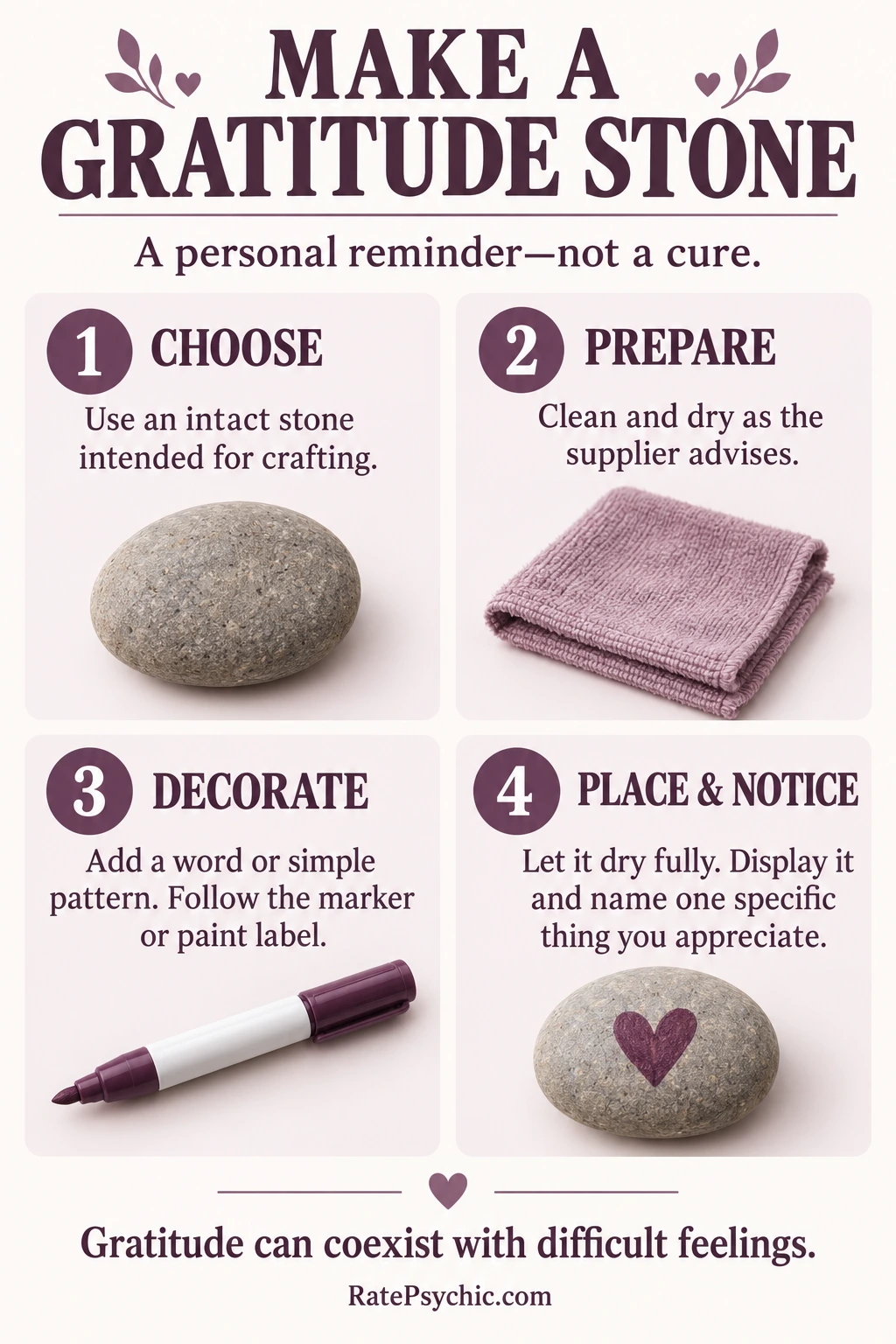
1. Choose
Pick an intact stone with enough room for a short word or simple design. It does not need to feel “chosen” by intuition or have a spiritual property. Check that it is appropriate for the craft materials you plan to use.
2. Prepare
Clean and dry it as the supplier advises. Preparation is for the surface, not removal of negative energy. Do not assume every mineral can be soaked or treated the same way.
3. Decorate
Add one word, a small heart, dots or another simple pattern. Follow the marker or paint label and let the design dry fully before handling. No sunlight “charging” step is required.
4. Place and notice
Display the finished stone somewhere suitable. When you notice it, name one specific thing you appreciate if you want to. You can also leave it as decoration.
Make the reminder specific
Instead of requiring yourself to say “Everything is good,” choose something concrete:
- “I appreciated the person who checked in today.”
- “I enjoyed a small part of my meal.”
- “I am glad I had time for this craft.”
You may appreciate one moment and still feel sad, angry or overwhelmed about something else. The stone does not require you to deny those feelings, excuse harm or take responsibility for circumstances outside your control.
Gratitude is not an obligation
If the exercise feels forced, skip it or use a different reminder: “What support would be useful?” You do not owe anyone a cheerful response. A craft object does not replace appropriate help when you need it.
A simple way to revisit it
You might keep the stone near a notebook and write one sentence when you feel like it. Do not turn missed days into a failure score. If the word no longer fits, choose another reminder or set the stone aside.
For another optional reflective use of an object, see crystals and life-purpose questions. If you prefer an attention exercise without an object, browse comfortable mindfulness options.
Keep decoration separate from a spiritual claim
You can give the design personal significance without claiming the stone balances chakras, guarantees calm or stores protective energy. A pattern can simply be something you enjoy making. If it belongs to a specific spiritual tradition, learn about that context rather than label every circular decoration a sacred practice.
The useful part is your chosen reminder and what, if anything, you do with it. A stone is not a requirement for appreciation or a test of how well you are living.
‘Thankful for waking up today’? How quaint! I suppose next they’ll tell us to be thankful for Mondays too!
The integration of meditation with gratitude is profound! It’s astonishing how shifting one’s mindset can lead to such transformative experiences.
This article presents a refreshing perspective on gratitude. The concept of a gratitude stone is particularly intriguing and could serve as a tangible reminder to cultivate positivity.
“Mandalas and chakras”—a delightful blend of Eastern philosophy wrapped in modern self-help jargon. But where’s the empirical evidence?
“Thankful I woke up today”? That’s the bare minimum! What’s next? A stone for every mundane task? ‘Thank you, spoon, for holding my cereal!’
Absolutely! It’s all about the intention we put into our daily lives that shapes our experiences.
‘Gratitude stones’? Sounds like an artisanal way to distract from genuine emotional work!
While the idea of gratitude is noble, reducing complex emotional issues to mere stones and meditative practices seems overly simplistic and somewhat naive.
I agree, but I wonder if the practice can truly shift deeply rooted negativity. Can a stone really hold that much power?