When a reader says they are “licensed,” “certified” or “professionally trained,” ask who issued the credential and what it actually covers. A business permit, course certificate and regulated professional license are different things. None independently proves psychic accuracy.
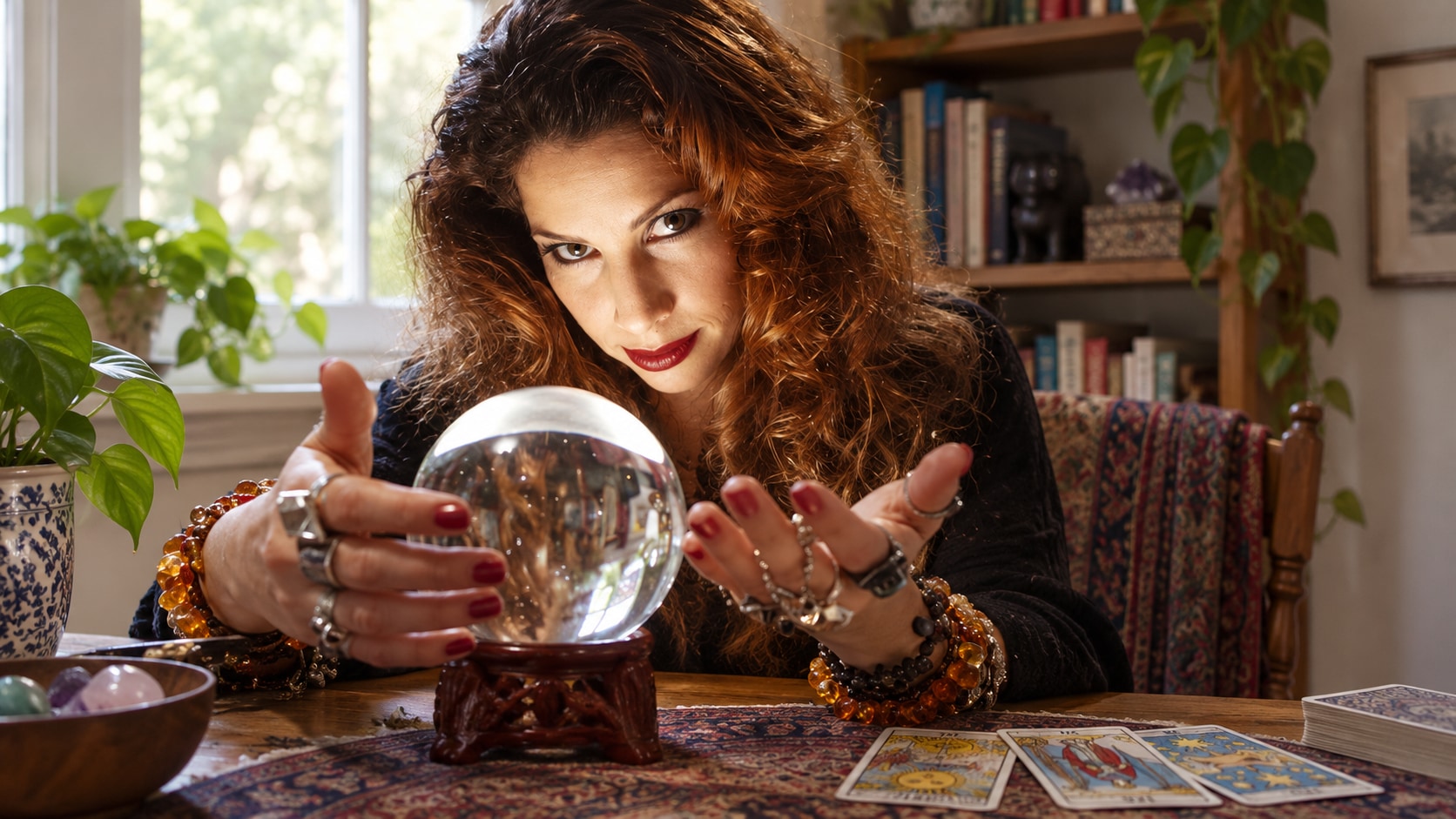
The cover is an illustrative reading scene, not a depiction of an accused provider.
Three credential types to keep separate
1. Business registration or permit
This concerns a business’s administrative status or permission to carry out a particular activity. Ask exactly what the record is, which authority issued it and what activity it covers.
In the United States, the Small Business Administration explains that licensing and permit requirements vary with business activity, location and government rules. Check the relevant authority for your situation; do not assume one requirement applies everywhere.
2. A course or association certificate
Ask what organization issued it, what training or assessment was completed and what “certified” means in that organization. It may describe study of a particular reading system rather than verification of an extraordinary ability.
A badge, certificate image or membership label is not enough to establish the scope. A private credential should not be presented as a different government or healthcare qualification.
3. A regulated professional credential
If the person separately claims a healthcare, mental-health, legal or other regulated professional role, check that claim with the appropriate official regulator and confirm which role applies to the actual service.
A psychic title does not replace those qualifications. For mental-health support, NIMH describes psychotherapy and the role of licensed mental-health professionals.
A simple way to verify the wording
- Write the exact claim. “Certified tarot reader” and “licensed therapist” do not mean the same thing.
- Identify the issuer. Ask for the organization or authority’s name and an appropriate way to verify the public claim.
- Use an independent channel. Check the issuer’s actual site or official record rather than relying only on a provider’s badge or testimonial.
- Check scope and status. What activity does the credential cover? Is the record current where that matters?
- Keep the limit. Even a genuine credential does not establish that a prediction, hidden-feeling claim or spirit message is accurate.
You do not need a provider’s private home address, personal documents or sensitive identifying details to start asking about the service. Seek clear business contact arrangements and relevant public verification without pressuring someone to disclose unnecessary personal information.
Credentials do not replace clear terms and respectful conduct
Ask what reading format is offered, what is included, how pricing works, whether follow-up costs extra, how messages are handled and how you can stop or complain. Use the reader-service shortlist and full-cost guide for a practical comparison.
Pause if you are pressured to pay for curse removal, promised control over someone else’s choices or told to abandon qualified care. Neither a certificate nor years in business makes that pressure something you must accept. Read payment warning signs and what to save if the conversation becomes a series of extra charges.
Recommendations and reviews need their own checks
A friend’s experience may help you identify a profile, but it does not verify a credential or establish psychic ability. Likewise, the number of favorable reviews is not a substitute for checking their content and source. Use our review-verification guide.
For a specific statement, keep a fair record of wording, information already supplied, misses and outcomes. Our claims, conduct and evidence guide explains why sincerity, service reliability and factual accuracy are separate questions.
Choose the right kind of help
You may choose a reading as an optional reflective experience, or decide not to book. If you need a professional service, verify the relevant professional role rather than relying on a spiritual label. If you feel vulnerable or pressured, use support and boundaries outside a reading.
A useful credential check tells you what a person studied or what role a record covers. It should not be stretched into a guarantee of a gift, a future outcome or your obligation to trust them.
While I appreciate the intent behind this article, it seems to perpetuate the same myths about psychics rather than debunking them. The belief in psychic abilities is fundamentally flawed, and we shouldn’t encourage it by legitimizing such practices.
‘Consulting your friends about psychics’? What next, getting medical advice from your pet goldfish? This article walks a fine line between pragmatism and absurdity.
This article offers a fascinating overview of public sentiment regarding psychics. It’s intriguing how societal beliefs can shape an entire industry, though I wonder about the psychological implications of seeking such external validation.
‘Trust but verify’ seems like an appropriate mantra here. The nuances behind human belief in psychics are worth delving into—perhaps reflecting deeper existential queries?
But isn’t it possible that some people find genuine comfort in these experiences? Dismissing them outright might ignore the subjective value they hold for many.
The statistics presented are quite revealing! It’s fascinating how such a significant portion of the population engages with psychics, reflecting deeper societal needs that merit further exploration.
Comfort is one thing, but encouraging reliance on unproven methods can be harmful. We should prioritize evidence-based approaches instead.
‘Trustworthy psychics’ is an oxymoron if I’ve ever heard one. The whole concept relies on unverifiable claims and subjective experiences—hardly a solid foundation for trust!
An insightful exploration of the psychic industry! The advice on how to discern the genuine from the fraudulent is particularly useful in today’s world where deception lurks in every corner.
This article presents a balanced view of the psychic industry, highlighting both the allure and the potential pitfalls. It’s refreshing to see such a nuanced discussion on a topic often shrouded in skepticism.
Ah yes, because nothing says ‘trustworthy’ quite like a person who claims they can see your future for a fee. Next, we’ll be asking our local barista for life advice too! What’s next, coffee readings?
‘Chakras closed for business’? Maybe they just need better marketing strategies! This article has some great tips—but who knew spiritual guidance could be such a sales pitch?
‘A psychic’s guidance’? Isn’t that just another way of saying ‘vague predictions’? The whole idea feels more like fortune cookie wisdom than anything else worthy of serious consideration.
‘A small fee can change your future?’ Sounds like something out of a poorly written sci-fi novel! I’m waiting for someone to charge me for ‘future insights’ based on my last pizza order!
While I appreciate the attempt to guide readers, it’s difficult to take this seriously when the entire premise rests on the shaky foundation of belief in something that lacks empirical evidence. Are we really giving credence to charlatans?
‘Psychic’ is just another word for ‘professional guesser.’
‘Licensed psychic’? Now there’s a paradox! What’s next? ‘Certified crystal ball reader’? Such absurdity does make for good entertainment though.
‘Ask your friends about their experiences’? That assumes they haven’t been hoodwinked as well! What a tangled web we weave when we seek soothsayers and sage advice!
‘Fortune cookies’ are going to become a new form of therapy!
‘Your chakras are closed’ sounds like something I’d tell my plants when they need watering! In all seriousness though, it’s amusing how easily people can be drawn into these narratives.